Distracted Driving Laws in Georgia - Texting and Phone Use
Georgia's Hands-Free Act carries real penalties for drivers who hold a phone behind the wheel - and real consequences for accident victims seeking compensation.
Every day on Georgia's roads, drivers glance at their phones to check a text, scroll through a notification, or tap out a quick reply. It takes only a few seconds of inattention for a routine commute to turn into a life-changing collision. If you or someone you love has been hurt by a distracted driver in Athens or anywhere in Northeast Georgia, understanding the state's distracted driving laws can help you protect your rights and strengthen your injury claim.
The personal injury attorneys at Wells and McElwee, P.C. have seen firsthand how devastating distracted driving accidents can be. Below, we break down what Georgia law says about texting and phone use behind the wheel, the penalties drivers face, and how these laws affect your ability to recover compensation.
What the Hands-Free Georgia Act Requires
Georgia's primary distracted driving statute is the Hands-Free Georgia Act , codified at O.C.G.A. § 40-6-241.2 . The law took effect on July 1, 2018, and it significantly changed what drivers can and cannot do with wireless devices behind the wheel.
Under this law, drivers in Georgia are prohibited from :
- Holding or supporting a phone or other wireless device with any part of the body while operating a motor vehicle
- Writing, sending, or reading any text-based communication, including texts, emails, and social media posts
- Watching or recording video while driving
- Reaching for a phone in a way that requires the driver to leave the seated, belted driving position
What the Law Allows
Drivers may use hands-free technology such as Bluetooth, speakerphone, or earpieces. Voice-to-text features, GPS navigation mounted on the dashboard, and briefly touching the phone to activate or deactivate a feature are generally permitted under O.C.G.A. § 40-6-241.2. However, holding the device at any point while the vehicle is in motion remains a violation.
Penalties for Distracted Driving in Georgia
Georgia treats hands-free violations as misdemeanors. The penalties escalate with each offense:
- First offense - $50 fine and one point on your driving record
- Second offense - $100 fine and two points on your driving record
- Third and subsequent offenses - $150 fine and three points on your driving record
These penalties may seem modest, but the points add up quickly. Accumulating 15 points within a 24-month period can lead to license suspension. More importantly, a citation for phone use at the time of a crash creates powerful evidence in a personal injury case.
3,308
People killed in distraction-related crashes across the U.S. in a single recent year
National Highway Traffic Safety Administration (NHTSA)
Injured by a Distracted Driver?
You may be entitled to compensation for medical bills, lost wages, and pain and suffering.
Get Your Free Case ReviewHow Distracted Driving Affects Your Accident Claim
When a driver causes a crash while using a phone, that behavior can serve as strong evidence of negligence in a civil lawsuit. Georgia follows a modified comparative negligence rule under O.C.G.A. § 51-12-33 , meaning you can recover compensation as long as you are less than 50 percent at fault for the collision.
Evidence of distracted driving can come from several sources:
- Police reports - Officers often note whether a driver was cited for a hands-free violation at the scene
- Phone records - Cell phone logs can show texts, calls, or app activity at the exact time of the crash
- Witness testimony - Passengers or bystanders may have seen the driver looking at a phone
- Crash reconstruction - Skid mark patterns and impact angles can reveal whether a driver failed to brake or react in time
Proving that the other driver was on their phone strengthens your claim and can increase the compensation you receive. In cases involving extreme recklessness, Georgia courts may even award punitive damages under O.C.G.A. § 51-12-5.1 to punish especially dangerous behavior.
Special Rules for Young and Commercial Drivers
Georgia law includes additional restrictions for certain groups. Drivers under the age of 18 who hold a Class D license are completely banned from using any wireless device while driving, even in hands-free mode, under O.C.G.A. § 40-6-241.1 . This applies to both talking and texting.
Commercial vehicle operators, including truck drivers, face federal regulations under the Federal Motor Carrier Safety Administration (FMCSA) rules that prohibit handheld phone use. A commercial driver caught texting can be disqualified from operating a commercial vehicle for 120 days on the first offense.
School Zones and Emergency Vehicles
While the Hands-Free Act applies everywhere on Georgia roads, distracted driving near school zones or around emergency vehicles carries heightened scrutiny. Crashes in these areas often result in more severe legal consequences and stronger grounds for civil claims by injured victims.
Distracted Driving Goes Beyond Texting
While Georgia's Hands-Free Act focuses on wireless devices, distracted driving takes many forms. Eating behind the wheel, adjusting the radio, reaching into the back seat, or even having an intense conversation with a passenger can all divert a driver's attention. Under Georgia's general negligence principles, any behavior that prevents a driver from exercising reasonable care can support an injury claim.
The three recognized types of driver distraction are:
- Visual - Taking your eyes off the road
- Manual - Taking your hands off the steering wheel
- Cognitive - Taking your mind off the task of driving
Texting is considered especially dangerous because it involves all three types of distraction at the same time. A driver sending a text at highway speed can travel the length of a football field in roughly five seconds without looking at the road.
What to Do After a Distracted Driving Accident
If you suspect the other driver was distracted when they hit you, there are several steps you can take to protect your claim:
- Call 911 immediately - A police report documenting the circumstances is critical evidence
- Note what you saw - If you observed the driver looking at a phone, write it down as soon as possible
- Seek medical attention - Even if injuries seem minor, a medical record links your treatment to the crash
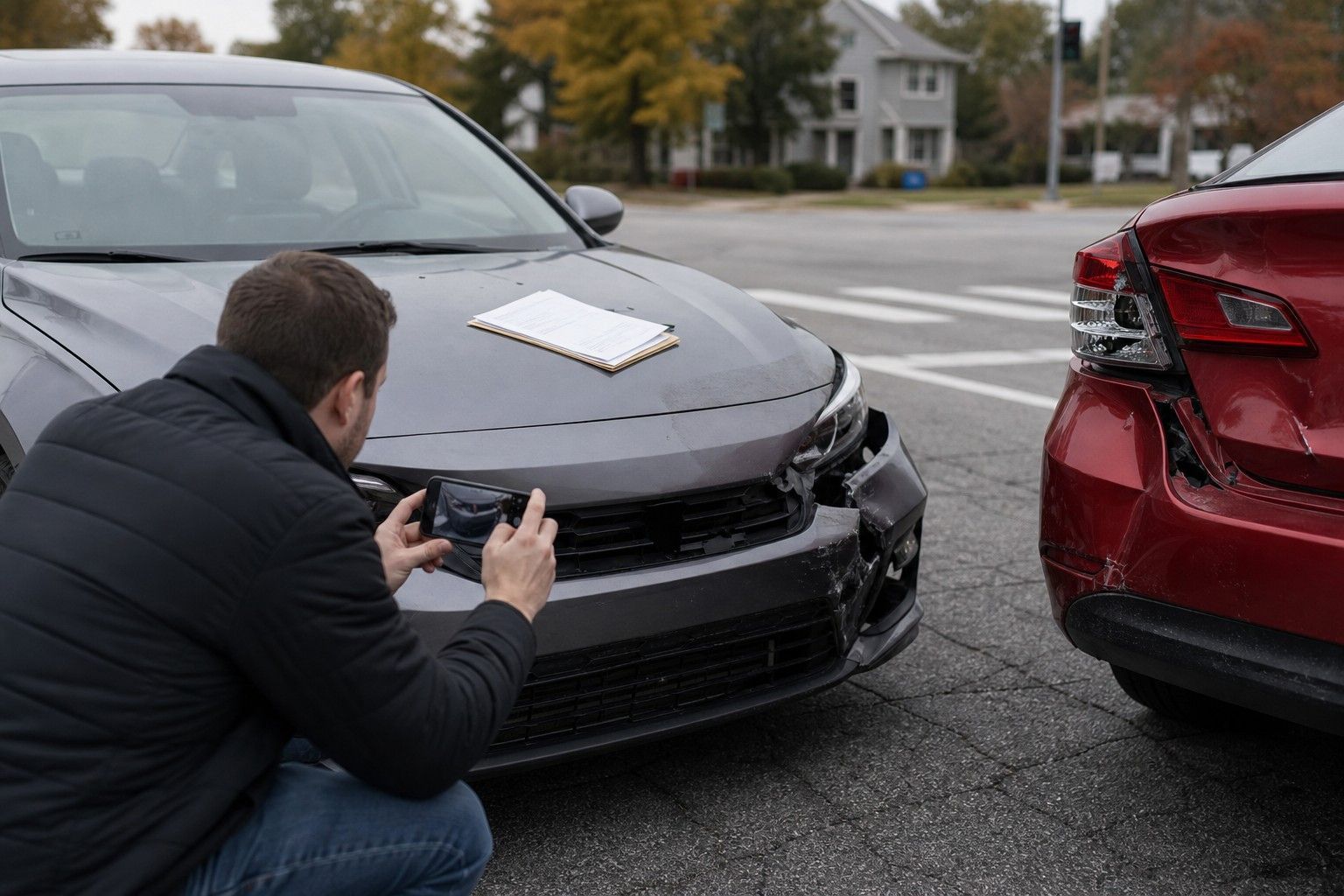
- Preserve evidence - Photos of the scene, damage, and any visible phone in the other vehicle can be valuable
- Contact an attorney - An experienced personal injury lawyer can subpoena phone records and other evidence before it disappears
Time matters. Georgia's statute of limitations for personal injury claims is two years from the date of the accident under O.C.G.A. § 9-3-33 . Waiting too long can mean losing your right to seek compensation entirely.
Ready to Discuss Your Case?
Schedule Your Free ConsultationNo fees unless we win your case. Call 706-510-2815 or contact us online.