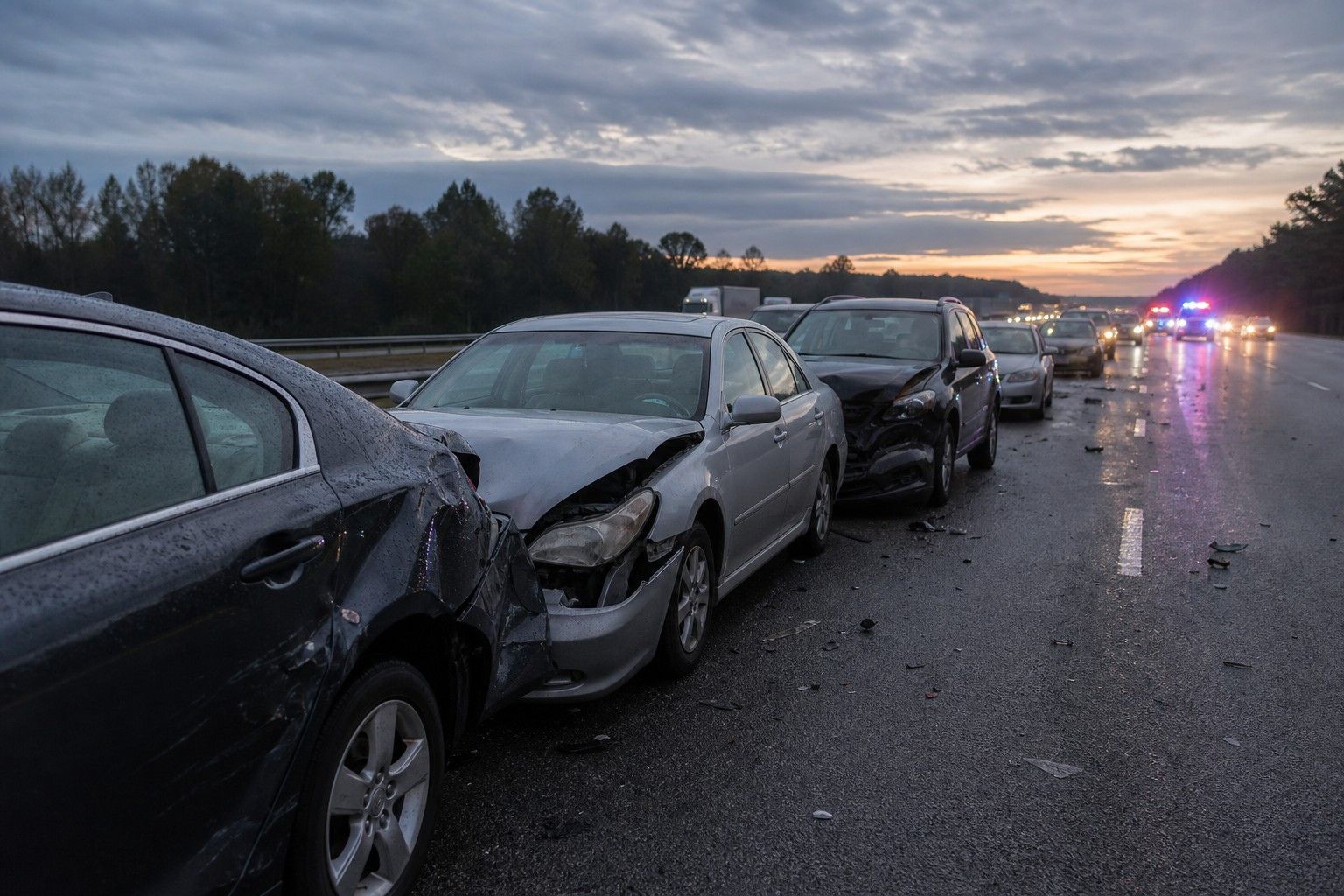
Rear-end collisions are some of the most common motor vehicle accidents on Georgia roads. Many people assume the driver who hits from behind is always at fault. That assumption is understandable, but it is not always accurate under Georgia law. Proving fault in a rear-end crash can involve complicated facts, and insurance companies know exactly how to use those complications against you.
If you or someone you love was hurt in a rear-end collision in Athens or anywhere in Northeast Georgia, understanding how fault works can make a real difference in your case.
The Presumption of Fault in Rear-End Accidents
Georgia law does create a general presumption that the trailing driver - the one who strikes the vehicle in front - is at fault in a rear-end collision. The legal reasoning is straightforward. Every driver has a duty to maintain a safe following distance and stay alert to the traffic ahead. Under O.C.G.A. Section 40-6-49, drivers must not follow another vehicle more closely than is reasonable given the speed, traffic, and road conditions.
This presumption means the rear driver often carries the burden of explaining why the collision happened. However, a presumption is not the same as a final ruling. The trailing driver can present evidence to rebut the presumption and show that the lead driver shares some or all of the blame.
When the Lead Driver May Share Fault
There are several situations where the driver in front may be partially or fully responsible for a rear-end crash:
- Sudden and unnecessary stops. If a driver slams on the brakes for no legitimate reason on a highway or busy road, they may share liability. This is sometimes called "brake checking" and can be considered aggressive or reckless driving.
- Broken brake lights or tail lights. Georgia law under O.C.G.A. Section 40-8-26 requires working brake lights on every vehicle. If the lead vehicle had non-functioning lights, the trailing driver may not have received adequate warning of a stop.
- Merging or cutting off. A driver who suddenly changes lanes and cuts directly in front of another vehicle, leaving almost no following distance, can be the primary cause of the collision.
- Reversing unexpectedly. If the lead driver put their vehicle in reverse in a travel lane or at an intersection, the rear driver may have had no opportunity to avoid the crash.
- Distracted driving by the lead driver. A driver who is texting or otherwise distracted may slow erratically or stop without warning in an unusual location.
Key Fact: Georgia follows a modified comparative negligence rule under O.C.G.A. Section 51-12-33. If you are found less than 50 percent at fault for a rear-end collision, you can still recover compensation - but your award will be reduced by your percentage of fault.
How Georgia's Comparative Negligence Rule Applies
Georgia's modified comparative negligence standard is critical in rear-end collision cases. Under this rule, a court or jury assigns a percentage of fault to each party involved. As long as your share of the fault is less than 50 percent, you are still eligible to receive damages.
For example, if you were rear-ended but a jury decides you were 20 percent at fault because one of your brake lights was out, your total compensation would be reduced by 20 percent. If your damages totaled $100,000, you would receive $80,000.
Insurance adjusters in Athens and across Georgia use this rule aggressively. They will look for any reason to shift blame onto you, even in what appears to be a clear-cut rear-end accident. That is why having a personal injury attorney review your case early is so important.
Evidence That Matters in Rear-End Collision Cases
Building a strong case after a rear-end collision depends on gathering the right evidence as quickly as possible. Key evidence includes:
- Police accident reports. The responding officer's report will note road conditions, witness statements, and sometimes a preliminary fault determination.
- Dashcam or traffic camera footage. Video evidence can show exactly what happened in the moments before impact, including whether anyone was braking erratically or driving aggressively.
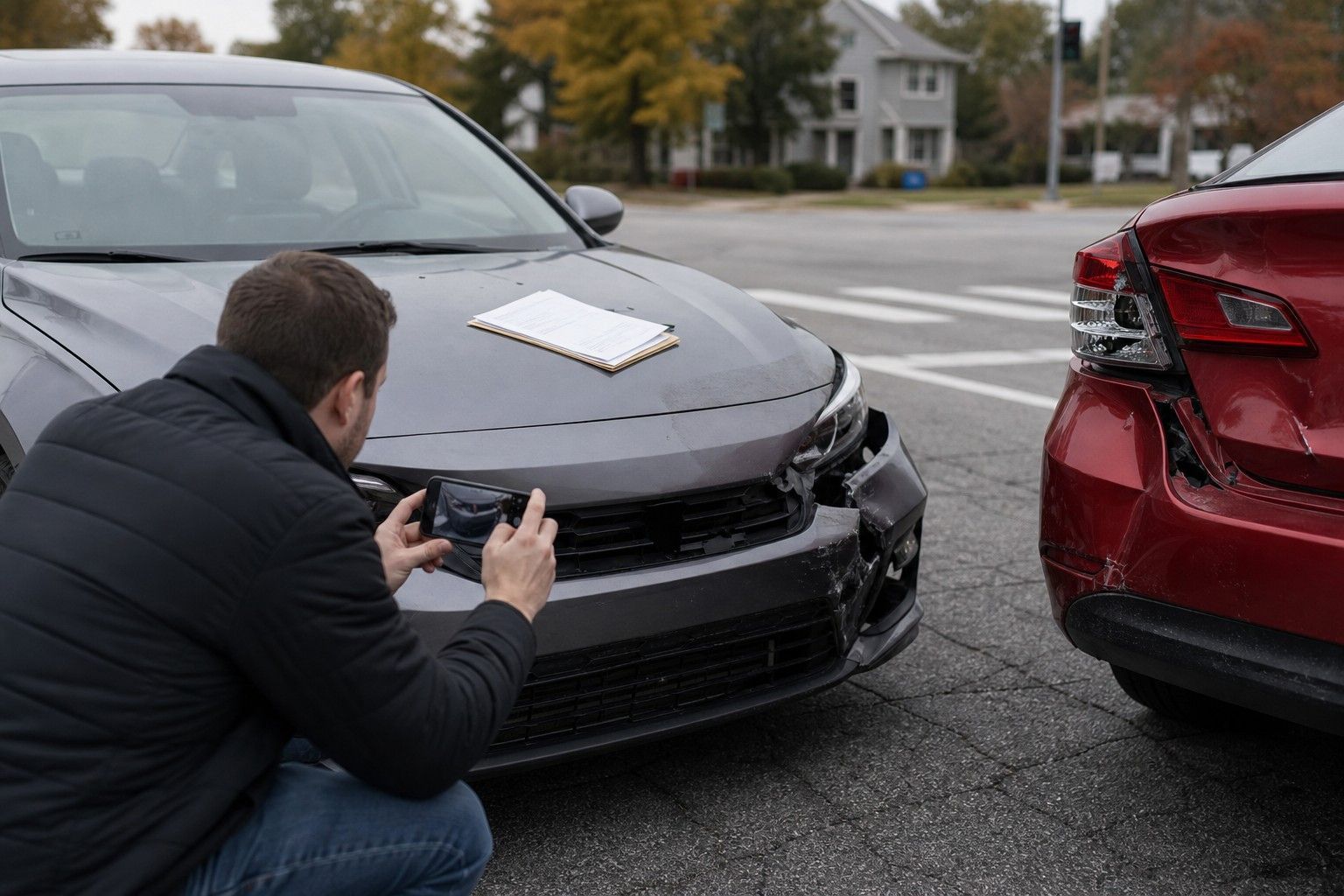
- Photographs of the scene. Pictures of vehicle damage, skid marks, road conditions, traffic signals, and the surrounding area help reconstruct the accident.
- Witness statements. Other drivers or bystanders who saw the collision can provide valuable testimony about what each driver was doing.
- Vehicle maintenance records. If defective brake lights or mechanical failure played a role, maintenance records can prove it.
- Cell phone records. If distracted driving is suspected, phone records can show whether either driver was texting or using their phone at the time of the crash.
Common Injuries in Rear-End Collisions
Rear-end accidents can cause serious injuries even at relatively low speeds. The sudden jolt of impact can send your body forward and then snap it back, putting extreme stress on the neck, spine, and soft tissues. Common injuries include:
- Whiplash and neck strains
- Herniated or bulging discs
- Concussions and traumatic brain injuries
- Shoulder and back injuries
- Fractured vertebrae
- Knee and wrist injuries from bracing for impact
Many of these injuries do not show symptoms immediately. It is common for pain, stiffness, and headaches to develop days or even weeks after the collision. That is why medical attention right after the accident is essential - both for your health and for your legal case.
What to Do After a Rear-End Collision in Georgia
If you have been involved in a rear-end collision in Athens or anywhere in Georgia, take these steps to protect yourself:
- Call 911 and file a police report. Even if injuries seem minor, an official report creates a valuable record.
- Seek medical treatment immediately. Prompt medical documentation connects your injuries directly to the accident.
- Document the scene. Take photos and videos of vehicle damage, the road, traffic signs, and any visible injuries.
- Get contact information from the other driver and any witnesses.
- Do not admit fault at the scene. Even a simple apology can be used against you later.
- Contact an experienced personal injury attorney. The attorneys at Wells and McElwee, P.C. can review your case and advise you on next steps before you speak with any insurance company.
Why You Need an Attorney for a Rear-End Collision Claim
Insurance companies handle rear-end collision claims every day. They have teams of adjusters and attorneys whose job is to minimize what they pay. Even when the other driver clearly caused the crash, the insurer may argue that your injuries are not as severe as you claim or that you were partly at fault.
An experienced Georgia personal injury lawyer can investigate the accident, gather and preserve evidence, negotiate with the insurance company, and take your case to court if necessary. When your health, finances, and future are on the line, having skilled legal representation matters.
| Injured in a rear-end collision in Athens or Northeast Georgia? Contact Wells and McElwee, P.C. for a free consultation to discuss your case and learn about your legal options. |