Uninsured Motorist Coverage in Georgia - Why It Matters
What O.C.G.A. 33-7-11 requires, added-on versus reduced-by coverage, and how to file a UM claim after a Georgia crash.
Uninsured motorist coverage in Georgia pays for your injuries when the at fault driver cannot. That means no liability insurance, too little insurance, or a driver who cannot be found. Georgia law says every auto insurance policy must include it unless you reject it in writing. The minimum is $25,000 per person and $50,000 per accident. Many Georgia drivers carry only the state minimum. So this coverage is often the only way to be made whole after a bad car accident.
⚡ QUICK SUMMARY
Under O.C.G.A. 33-7-11 , Georgia auto policies must include uninsured motorist (UM) coverage of at least $25,000 per person / $50,000 per accident unless the insured rejects it in writing . Georgia offers add-on coverage, which stacks on top of the at fault driver's policy, and non-stacking coverage, which does not. About 1 in 3 U.S. drivers are uninsured or underinsured. You have two years to file an injury claim.
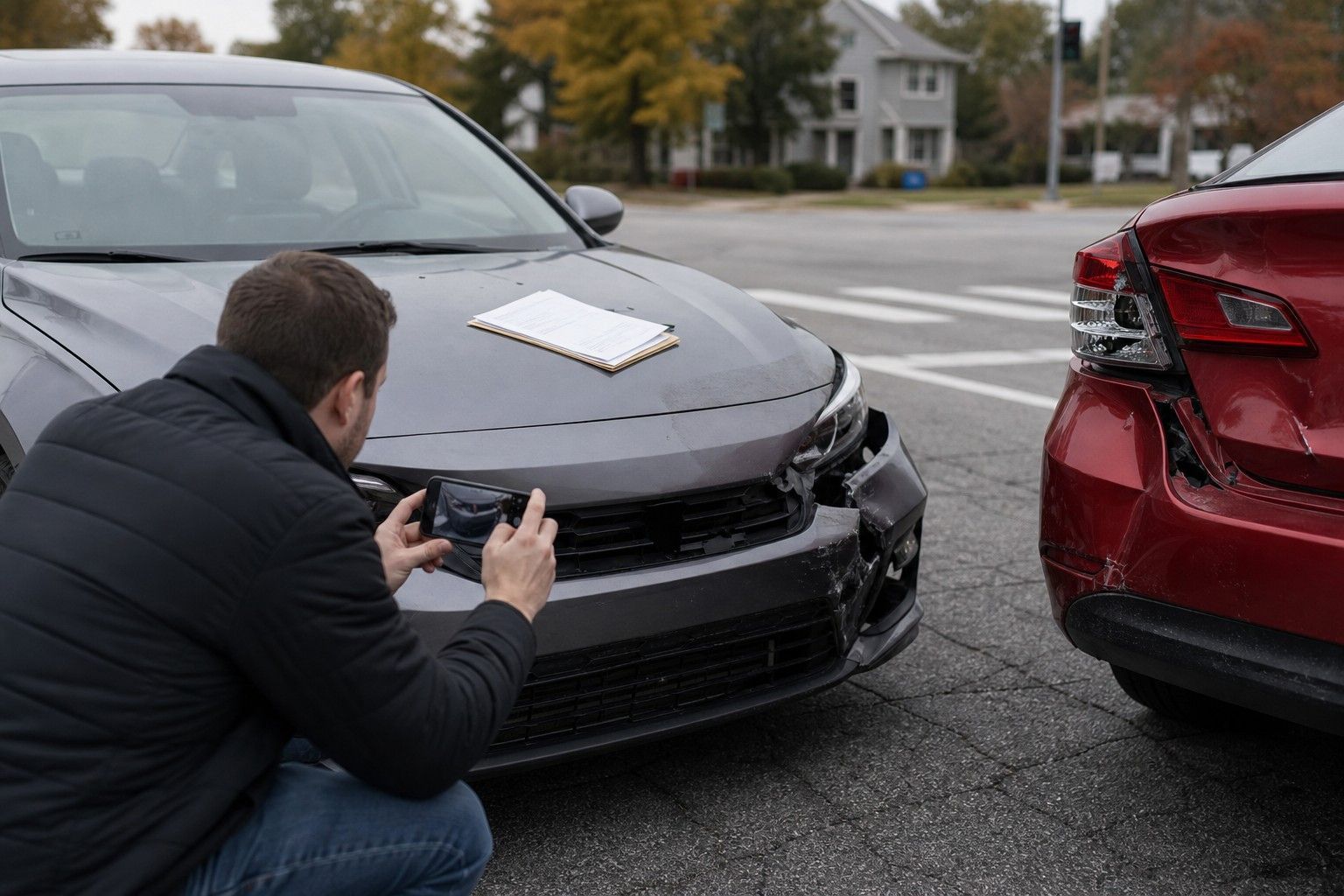
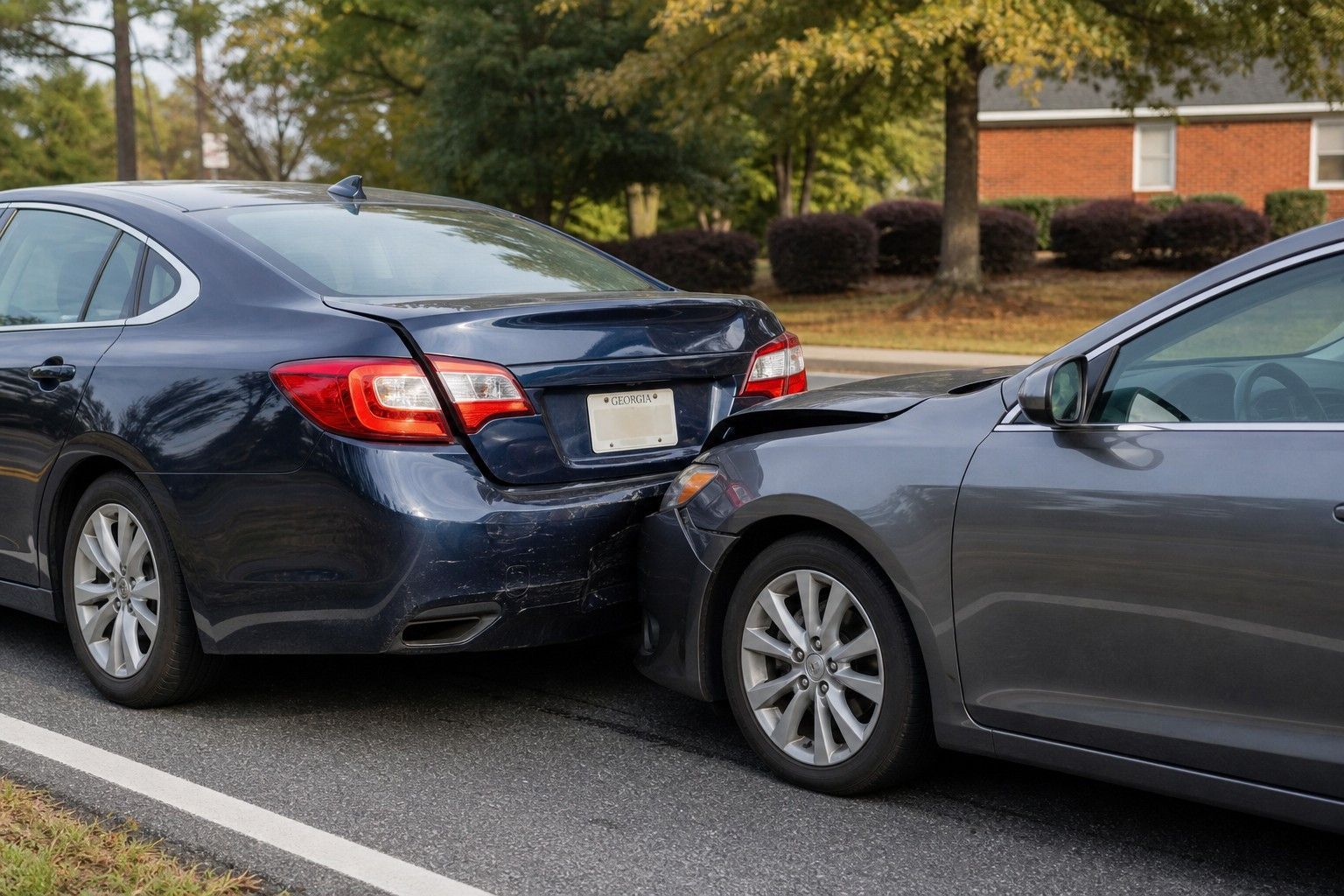
You did everything right. You stopped at the light on Broad Street. The other driver did not. Then you learn the negligent driver has no insurance, or only carries the state minimum, and your medical bills are already past $60,000. Someone else's negligence has become your money problem. This happens in Athens every week. The one thing that saves families in this spot is a part of their own auto insurance policy that most drivers never read.
Wells and McElwee, P.C. is a personal injury law firm in Athens, Georgia. We handle car accident and uninsured motorist claims for injured victims across Athens-Clarke County and Northeast Georgia. You can read about our attorneys before you call.
What Is Uninsured Motorist Coverage? Georgia Basics
Uninsured motorist coverage, often called UM coverage, is part of your own auto insurance policy. It pays you when the at fault driver cannot. It covers medical expenses, lost wages, and physical pain and suffering. In Georgia, it covers property damage too. For a family living on one paycheck, lost income after a crash hurts. It can hurt as much as the medical care itself.
In Georgia, the same coverage also works as underinsured motorist coverage, or UIM coverage. That means it can pay when the at fault driver has some liability coverage, but not enough to cover your losses. Insurers often write it as UM/UIM on your policy. Underinsured motorist claims are common in Georgia. Too many drivers carry only the minimum.
Uninsured Driver
The at fault driver has no liability insurance at all. When an uninsured driver hits you, your UM coverage steps in as if it were their policy.
Underinsured Driver
The driver has insurance, but the coverage limits are too low for your injuries. UIM coverage can cover the gap.
Hit and Run
The driver flees and is never found. UM coverage can apply to a hit and run, but you must report the accident and follow policy rules.
Is Uninsured Motorist Coverage Legally Required in Georgia?
Yes, under state law, unless you reject it in writing. O.C.G.A. 33-7-11(a)(1) says no auto policy may be sold in Georgia without UM coverage. The insurance company must offer at least $25,000 per person and $50,000 per accident for bodily injury, plus $25,000 for property damage. You can also pick UM coverage limits that match your own liability coverage limits.
Under section 33-7-11(a)(3), you lose the coverage only if a named insured rejects it in writing. Many drivers sign that form at the agent's desk to save a few dollars a month. They do not know what financial protection they gave up. Uninsured motorist coverage in Georgia is one of the few parts of a policy that pays you directly. Rejecting it saves very little money.
Check Your Coverage Limits Tonight
Your policy's declarations page lists your UM/UIM coverage limits. If it says "rejected" or shows only $25,000, you may be one uninsured driver away from paying your own medical bills. Raising UM coverage limits is often one of the cheapest changes you can make to your auto insurance.
What Is the Difference Between Add-On and Reduced-By UM Coverage?
Add-on coverage pays on top of the at fault driver's insurance. Reduced-by coverage, also called non-stacking coverage, subtracts what the other insurer pays from your UM limit. Georgia law, in O.C.G.A. 33-7-11(b)(1)(D)(ii), makes add-on the default. The non-stacking type applies only if you chose it.
The difference is not small. Say your injuries are worth $100,000 and the driver who hit you has the $25,000 state minimum. Your own UM policy is $50,000.
ADD-ON UM
$75,000
$25,000 from the driver's liability coverage plus your full $50,000 UM limit
REDUCED-BY UM
$50,000
$25,000 from the driver plus only $25,000 from UM, because your limit shrinks by what the driver's insurance pays
These are examples, not a promise of any result. Every policy and every accident is different, and results vary. But it shows why the type of UM coverage matters as much as the amount.
💡 Pro Tip
UM coverage can follow the person, not just the car. Depending on your policy, it may cover you as a passenger in a friend's car, on foot, or on a bike. It may also cover family members in your household. Ask your agent to confirm this in writing before you need it.
Hit by a Driver With No Insurance?
We read your insurance policies, find every layer of coverage, and deal with your own insurance company for you.
Get Your Free Case ReviewHow Many Drivers in Georgia Are Uninsured?
More than most people think. Insurance Research Council reports show that 15.4 percent of U.S. drivers had no insurance in 2023. One in three had none or too little. Georgia is worse than average. The IRC reports that Georgia's uninsured rate is 25 percent above the U.S. average. Georgia's underinsured rate was the third highest in the country in 2022.
1 in 3
U.S. drivers were uninsured or underinsured in 2023
Insurance Research Council, Uninsured and Underinsured Motorists: 2017 to 2023 (2025)
Put those numbers together. In a car accident on Highway 316 or the Loop, there is a real chance the at fault driver cannot pay for the harm they caused. Your own uninsured motorist insurance is the safety net. Vehicle owners who skip it are betting that every driver around them is insured. The numbers say that bet is a bad one. Motor vehicle crashes with uninsured drivers are a fact of life here. Without it, the medical debt from a serious crash lands on you.
Which Insurance Coverage Pays First After a Crash With an Uninsured Driver?
Several kinds of insurance coverage can apply to one accident. This is even more true when multiple vehicles are involved. Knowing which one pays for what helps you see where the gaps are.
Liability Coverage
The negligent driver's liability insurance pays for your injuries and vehicle damage first. If the driver is uninsured, there is no available liability coverage at all.
UM/UIM Coverage
Your own uninsured and underinsured motorist coverage fills the gap left by an uninsured or underinsured motorist. This is where UM/UIM coverage kicks in.
Medical Payments Coverage
Optional coverage on your own policy. It pays medical bills no matter who was at fault, up to its limit.
Health Insurance
Your health insurance may pay medical bills while the claim is open. It may later ask to be paid back from your settlement.
Collision and Comprehensive Coverage
Collision coverage fixes your car after a crash. Comprehensive coverage handles theft, storms, and other non-crash damage. Neither pays for injuries.
Sorting out which coverage pays, and in what order, is a big job. It is one of the main things a car accident lawyer does. An experienced attorney can also make sure one insurer does not take credit for what another one paid.
How Do You File an Uninsured Motorist Claim in Georgia?
You file the claim with your own insurance company. Do not expect it to be easy. Your insurer now stands in the shoes of the at fault driver. It may question your injuries and offer less than full compensation.
- Notify your insurance company promptly - most insurance policies require prompt notice. Hit and run claims have strict reporting rules.
- Get the official accident report - the police report documents that the uninsured driver had no insurance or fled the scene.
- Confirm the other driver's coverage - your lawyer can demand the other driver's policy limits in writing. Witness statements and photos of the vehicle damage help too.
- Serve your UM carrier if you sue - under O.C.G.A. 33-7-11(d), a copy of the lawsuit must be served on your UM insurer as if it were a defendant.
- Watch the deadline - Georgia gives you two years to file an injury lawsuit under O.C.G.A. 9-3-33.
You can read more about how Georgia's fault-based insurance system works and your legal options after a hit and run accident in Georgia. If an uninsured driver or an underinsured driver hurt you, our firm can help you find every dollar of coverage that applies. There is no fee unless we recover for you.
Uninsured Motorist Coverage Questions Georgia Drivers Ask
Does UM coverage apply to a hit and run in Georgia?
Yes, in many cases. Georgia treats an unknown vehicle as an uninsured motorist. If there was no physical contact between the vehicles, you need an independent witness. That witness must back up your account of the crash. Report the hit and run to the police and your insurance company right away.
Can my insurance company raise my rates for filing a UM claim?
Georgia law limits how insurers treat claims where you were not at fault, though not everyone knows this. Ask your agent how your insurer handles UM claims. Do not let fear of a rate change stop you from using coverage you paid for.
How much uninsured motorist coverage should I carry?
There is no single right answer. Many drivers choose UM/UIM limits that match their liability coverage limits. Think about your health insurance and your income. Think about how a long hospital stay would hit your family. Higher limits often cost far less than most drivers expect.
Do I need a lawyer for an uninsured motorist claim?
Not always, but it helps when injuries are serious. Your own insurer is now on the other side. An experienced attorney knows how to prove the full extent of your injuries and document your lost wages. A lawyer also knows how to serve the UM carrier correctly if the case goes to court. A clear understanding of your policy is the first step toward financial recovery.
Ready to Discuss Your Car Accident Case?
Schedule Your Free ConsultationNo fees unless we win your case. Call 706-510-2815 or contact us online. Wells and McElwee, P.C., Athens, Georgia. This article is general information, not legal advice for your situation. Every case is different and results vary.